
ΔΙΣΚΟΣ ΤΗΣ ΦΑΙΣΤΟY

| ΕΙΣΑΓΩΓΙΚΑ ΕΠΕΑ ΠΡΟΛΕΓΟΜΕΝΑ ΤΟY ΣYΓΓΡΑΦΕΩΣ | English translation |
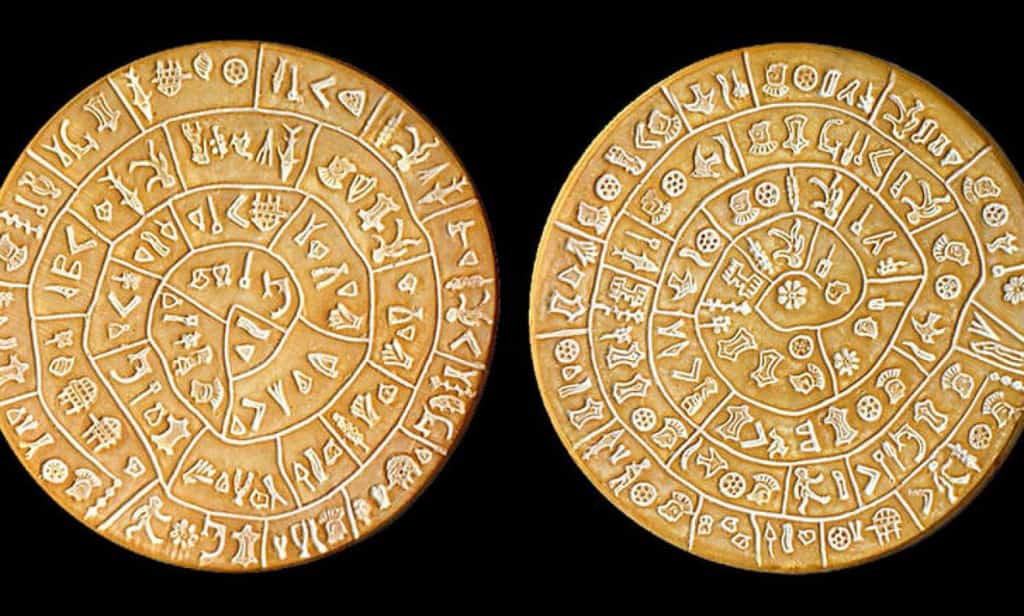
| Οὐδέποτ ̓ ἐθεώρησα ὅτι οἱ ἀρχαῖοι πρόγονοί μας ἦσαν πέπονες – κατὰ ῥῆσιν Ὁμήρου – ὥστε νὰ μεταχειρίζονται διὰ τὸν γραπτὸν λόγον τῆς δίας Ὀλυμπιακῆς Ἑλληνικῆς γλώσσης μόνον τὰς συλλαβάς. Διὰ νὰ ἔχῃς καὶ διὰ νὰ χρησιμοποιῇς συλλαβὰς πρωτίστως πρέπει νὰ ἔχῃς καὶ νὰ γνωρίζῃς τοὺς φθόγγους· ἄρα ποῖος εἶνε ὁ σκοπὸς τῆς συλλαβογραφῆς; Ἀλλ ̓ ἐπειδή, κατὰ τὴν ἀρχαιοτάτην ἐκείνην ἐποχήν, δὲν εἶχον ἐπινοηθῇ οἱ ὁμηρικοὶ χαρακτῆρες τοῦ Ὀλυμπιακοῦ ἑλληνικοῦ Ἀλφαβήτου τῆς δίας ἑλληνικῆς γλώσσης, οἱ Ἕλληνες εἶχον ἄρτιον καὶ καθαρὸν προφορικὸν λόγον, τὸν ὁποῖον ἀνέπτυσον καὶ ἐφθέγγοντο μὲ τὴν βοήθειαν τῆς γραφῆς, ἡ ὁποία ἀντὶ τῶν ὁμηρικῶν χαρακτήρων εἶχεν εἰκονοσήματα· ἐξ αὐτῶν τῶν σημάτων (χαρακτήρων) ἡ φωνητικὴ ἀξία ἑκάστου ἦτο ὁ α’ φθόγγος. Ἐπὶ παραδείγματι, πῶς λοιπὸν εἰς τὴν λεγομένην Γ. Γ. Α. καὶ τὴν Γ. Γ. Β. (κατὰ τὴν γνώμην μου εἶνε ταὐτόσημοι) ἀλλὰ καὶ εἰς τὸν ἀρχαιότερον ἀπὸ αὐτῶν, τὸν δίσκον τῆς Φαιστοῦ, παριστάνονται ἀπεικονιζόμενα τὰ μονοσύλλαβα ὀνόματα «γλαῦξ» ἀλλὰ καί « βλάξ » καὶ πῶς τὸ ἀπαρέμφατον «σπεῖν» τοῦ ἀορίστου τοῦ ῥήματος ἕπω; ὑπάρχει δηλαδὴ τινα συλλαβὴ ποὺ νὰ γράφῃ αὐτοὺς τοὺς ἤχους; Οἱ ἀρχαιολόγοι καὶ ἐρευνηταὶ τῷ 1908 ὅταν ἀνεκάλυψαν εἰς τὴν Φαιστὸν τῆς Κρήτης τὸν τυπογραφημένον πήλινον δίσκον εὐθὺς ἀπεφάνθησαν ὅτι ὁ δίσκος ἦτο συλλαβογραφημένος, ἐπειδὴ ἐμέτρησαν 45 διαφορετικὰ σήματα. Ἔχοντες κατὰ νοῦν τὰ 24 γράμματα τοῦ ἑλληνικοῦ Ἀλφαβήτου, μέχρι τὰ 45 τοὺς περίσευψαν τὰ 21 γράμματα, ἄρα ὁπωσδήποτε ὁ δίσκος ἦτο τυπωμένος μὲ συλλαβάς, εἶπον τότε αὐτοί. … Ἔκτοτε οἱ πάντες τοὺς ἀκολουθοῦν ὅπως οἱ ὄϊες. Καὶ ὅμως ὁ δίσκος εἶνε τυπωμένος κατὰ 97,8% μὲ φθόγγους καὶ διφθόγγους καὶ κατὰ 2,2% μὲ μίαν μόνην συλλαβήν (ἀξ-ίνη) ὡς συντομογραφίαν· ὑπάρχουν ὅμως 6 ἀμφισήματα μὴ στερεότυπα, πότε εἶνε φθόγγοι καὶ πότε εἶνε συλλαβαί. Δῆλα δή: τὰ 45 διαφορετικὰ σήματα τοῦ δίσκου τῆς Φαιστοῦ ἔχουν ὡς ἑξῆς: α 24 σήματα ἀντιστοιχοῦντα πρὸς τοὺς χαρακτῆρας τοῦ ἑλληνικοῦ Ἀλφαβήτου. β 13 διπλᾶ σήματα ἀντιστοιχοῦντα εἰς χαρακτῆρας τοῦ ἑλληνικοῦ Ἀλφαβήτου. γ 6 σήματα ἀντιστοιχοῦντα πρὸς τοὺς 8 διγθόγγους, ἐκτὸς τῶν δύο: [αυ – ηυ]. δ 1 σῆμα ἀντιστοιχοῦν πρὸς τὸν καταχρηστικὸν δίφθογγον [ῃ] ἐκτὸς τοῦ [ῳ]. ε 1 σῆμα μὲ συλλαβικήν – συντομογραφικὴν ἀξίαν: [ἀξ] –ίνη. Ἐκ τῶν 45 σημάτων τὰ 6 εἶνε ἀμφισήματα, δηλαδὴ ἔχουν καὶ συλλαβικὴν ἀξίαν, ἤτοι: ἀγ–κών, ἄγ–νος, ἄσ– ταχυς, ἄφ–αλος, να–ῦς καί (νη–ῦς), ψα–λιδόστομος. | I never considered that our ancient ancestors were “softies” (or “gullible”)—to use Homer’s expression—so as to use only syllables for the written word of the divine Olympic Greek language. To have and to use syllables, one must first have and know the phonemes (vowels/sounds); therefore, what is the purpose of syllabic writing? But since the Homeric characters of the Olympic Greek Alphabet of the divine Greek language had not been invented in that most ancient era, the Greeks had a perfect and pure spoken language, which they developed and spoke with the aid of writing that, instead of Homeric characters, used pictograms/iconic signs. The phonetic value of each of these signs (characters) was the first phoneme. For example, how, then, are the monosyllabic words «γλαῦξ» (owl) and «βλάξ» (dullard/stupid) and the infinitive «σπεῖν» (to follow/attend) of the aorist of the verb hepō represented and depicted in the so-called G. G. A. and G. G. B. (which in my opinion are identical) but also in the oldest of them, the Phaistos Disc? Is there, in other words, a syllable that writes these sounds? When archaeologists and researchers discovered the printed clay disc in Phaistos, Crete, in 1908, they immediately concluded that the disc was syllabic, because they counted 45 different signs. Having the 24 letters of the Greek Alphabet in mind, they found 21 letters “left over” up to 45. “Therefore, the disc was certainly printed with syllables,” they said at the time. … Since then, everyone follows them like sheep. And yet, the disc is printed 97.8% with phonemes (vowels) and diphthongs, and 2.2% with a single syllable (ax-ine) as an abbreviation. However, there are 6 ambiguous, non-stereotypical signs that are sometimes phonemes and sometimes syllables. Specifically: the 45 different signs of the Phaistos Disc are as follows: a. 24 signs corresponding to the characters of the Greek Alphabet. b. 13 double signs corresponding to characters of the Greek Alphabet. c. 6 signs corresponding to 8 diphthongs, excluding two: [αυ – ηυ]. d. 1 sign corresponding to the improper diphthong [ῃ], excluding [ῳ]. e. 1 sign with a syllabic-abbreviatory value: [ἀξ] –ίνη (axe). Out of the 45 signs, 6 are ambiguous, meaning they also have a syllabic value, namely: ag–kōn (elbow/bend), ag–nos (pure/holy), as–takhus (ear of grain), aph–alos (unnavigable/navel-less), na–ūs (or nē–ūs) (ship), and psa–lidostomos (with scissor-like mouth). |
| Ἀκόμη θεώρησαν καὶ ἐπέβαλον τὴν ἀνάγνωσιν τοῦ δίσκου Φαιστοῦ ἀπὸ τὴν περιφέρειαν πρὸς τὸ κέντρον… Φεῦ ὅμως, ἅπαντες ἔπεσον εἰς τὴν μελανὴν ὀπὴν τοῦ Ἐρέβους τῆς ἀγνωσίας· ἂν ὅμως, ὅπως τότε καὶ τώρα, τις πλάσῃ μὲ τὰς χεῖρας μαλακὸν πηλὸν καὶ τὸν ἁπλώσῃ κύκλῳ ἐπὶ σανίδος, τὸ κείμενον ποὺ θὰ γράψει σπειροειδῶς πρέπει νὰ ἔχῃ τὴν ἀρχὴν εἰς τὸ κέντρον διότι ὁ γραφεὺς γνωρίζει τὴν ἀρχήν, δὲν γνωρίζει ὅμως ἐπ ̓ ἀκριβῶς τὸ τέρμα τοῦ χώρου. Ἄρα κινούμενος πρὸς τὴν περιφέρειαν – ὅταν τερματίσῃ τὸ ἔργον – θὰ κόψει κυκλικῶς τὸν ἐπιπλέοντα πηλὸν ἢ θὰ προσθέσει, ἂν δὲν ἔχει ἀκόμη ἀποσώσῃ τὴν γραφήν. Αὐτὰ τὰ δύο λάθη, ἡ συλλαβογραφὴ καὶ ἡ ἐκ τῆς περιφερείας ἀνάγνωσις τοῦ δίσκου, ἦσαν ἡ πνευματικὴ τροχοπέδη τῶν λεγομένων « ἐπιστημόνων » περὶ τῶν γραφῶν καὶ γλωσσῶν, οἵτινες αὐτο – ἐεργμένοι εἰς τὴν ἰνδοευρωπαϊκὴν καὶ εἰς τὴν σημιτικήν « μάνδραν » ἐρευνοῦν διὰ κλάδους γλωσσῶν εἰς τάς « ῥίζας » τοῦ λεγομένου γλωσσολογικοῦ δένδρου ……. κρεμασμένοι ἀνάποδα. …… Τὰ δὲ συμπεράσματα εἶνε ἀνθελληνικά, ἀποτρόπαια, παραπλανητικά, ψευδῆ καὶ ἀντιεπιστημονικά· διδάσκονται ὅμως ἀπὸ τὰ λεγόμενα «πανεπιστήμια» καὶ ἀπὸ ἱστοσελίδας τοῦ διαδικτύου, τὸ ὁποῖον ἄλλοι κατήντησαν …… κοπροφόρον. Συνεπῶς τὰ περὶ ἀποκωδικοποιήσεως τοῦ δίσκου τῆς Φαιστοῦ καὶ τὰ περὶ τῶν πινακίδων τῆς Γ. Γ. Β. ἐκ τῶν βαρβαροφώνων ἐρευνητῶν, οὐδεμίαν ἀξίαν ἔχουν διότι αὐτοί, μὴ γνῶσται τῆς Ἑλληνικῆς γλώσσης καὶ μάλιστα τῆς πρωταρχικῆς της μορφῆς, δηλαδὴ τῆς ὁμηρικῆς, ἐπεχείρησαν διὰ τοῦ βαρβαρικοῦ γλωσσικοῦ « ἐργαλείου » ὡς εἶνε ἡ λεγομένη λατινική, ἀγγλική, γαλλικὴ γλῶσσα κ. ο. κ. νὰ ἑρμηνεύσουν τὴν ἀρχέγονον γραφὴν τῆς δίας Ὀλυμπιακῆς ἑλληνικῆς γλώσσης. Δῆλα δὴ ἐκεῖνοι μὲ τὸ τσεκοῦρι ὡς ἐργαλεῖον, ἔκαμον ἐργασίας ἀναλύσεως καὶ ἀνασυνθέσεως εἰς τὸ ἀντικείμενον « ὡρολόγιον » τὴν Ἑλληνικὴν γλῶσσαν τῶν Ὀλυμπίων θεῶν· τοὐλάχιστον τοῦτον ἐστιν ὕβρις πρὸς τὸν θεῖον Νόον. Διὰ τοὺς προαναφερθέντας λόγους: α) συλλαβογραφή, β) ἀνάγνωσις ἀπὸ τὴν περιφέρειαν, γ) ἀγνωσία τῆς Ὁμηρικῆς διαλέκτου, δ) χρῆσις τῆς λατινικῆς, ἢ καὶ τῆς ἀγγλικῆς λεγομένης γλώσσης, συνεχῶς οἱ ἐπιίστορες αὐτογελοιοποιοῦνται· ὡρισμένοι ὅμως τόσο πολύ, διότι ἰσχυρίζονται ὅτι ἡ γραφὴ καὶ ἡ γλῶσσα, ἐπὶ τοῦ δίσκου τῆς Φαιστοῦ, δὲν εἶνε ἑλληνική. …. Πῶς ὅμως ἐκεῖνοι ἔφθασαν εἰς αὐτὸ τὸ συμπέρασμα, ἀφ ̓ οὗ οὐδόλως ἀπεκρυπτογάφησαν τὰς πληροφορίας τοῦ δίσκου τῆς Φαιστοῦ; καὶ ἂν ἡ γλῶσσα δὲν εἶναι ἡ ἑλληνική, τότε ποίων βαρβάρων εἶναι; Τὴν ἐποχὴν ἐκείνην (3.157 π.Χ.) ποὺ ὁρίζω τὸν δίσκον τῆς Φαιστοῦ ἄλλη γλῶσσα δὲν ὑπῆρχε, πλὴν βεβαίως τῆς ἑλληνικῆς γλώσσης, οἱ βάρβαροι ἦσαν ἄγλωσσοι ἔχοντες ὀλίγας λέξεις ἢ ἴσως κραυγάς, ἶσα – ἶσα πρὸς συνενόησιν. Ἔγραφον ἐν Πεύκῃ Ἀττικῆς, Σεπτεμβρίου φθίνοντος τοῦ 2024. | Furthermore, they considered and imposed the reading of the Phaistos Disc from the periphery towards the center… Alas, however, all have fallen into the black abyss of the Erebus of ignorance. If, however, as was the case then and is true now, someone molds soft clay with their hands and spreads it circularly upon a board, the text they will write spirally must begin at the center because the writer knows the beginning, but does not know precisely the end of the space. Therefore, moving toward the periphery—when they finish the work—they will circularly cut off the excess clay or they will add more, if they have not yet completed the writing. These two errors, the syllabic writing and the reading of the disc from the periphery, were the intellectual brake of the so-called “scientists” (scholars) concerning scripts and languages. They, having self-imprisoned themselves in the Indo-European and Semitic “pen,” search for branches of languages at the “roots” of the so-called linguistic tree …… hanging upside down. …… The conclusions reached are anti-Hellenic, abhorrent, misleading, false, and anti-scientific; yet they are taught by the so-called “universities” and from websites on the internet, which others have degraded into a …… dung-carrier. Consequently, the work regarding the decipherment of the Phaistos Disc and the tablets of G. G. B. (Linear B) by the barbarian-speaking researchers has no value whatsoever, because they, not being knowledgeable of the Greek language, and especially its primordial form, namely the Homeric, attempted with the barbarian linguistic “tool,” such as the so-called Latin, English, French language, etc., to interpret the primeval script of the divine Olympian Greek language. That is to say, those people, using an axe as a tool, performed analysis and synthesis work on the object “watch” (horologion), which is the Greek language of the Olympian Gods; at the very least, this is an act of hubris toward the Divine Mind. For the aforementioned reasons: a) syllabic writing, b) reading from the periphery, c) ignorance of the Homeric dialect, d) use of the Latin, or even the so-called English language, the know-it-alls continuously make themselves look ridiculous; yet some do so extremely, because they claim that the script and the language on the Phaistos Disc are not Greek. …. But how did they reach this conclusion, since they have by no means deciphered the information on the Phaistos Disc? And if the language is not Greek, then which barbarians does it belong to? In that era (3,157 B.C.) which I assign to the Phaistos Disc, no other language existed, except of course the Greek language; the barbarians were languageless, having few words or perhaps cries, barely enough for communication. Written in Pefki, Attica, in the waning days of September 2024. |
| Κυρίαι καὶ κύριοι, φίλοι ἐλλόγιμοι Ἕλληνες καὶ Φιλέλληνες ….. χαίρετε …. Ὀνομάζομαι Ἀριστοτέλης Ντοβόρης, εἶμαι συγγραφεὺς ὁμηριστής, ἕως τοῦδε ἔγραψα 32 βιβλία, τὰ περισσότερα σχετικὰ μὲ τὸν Ὅμηρον ὁ ὁποῖος εἶνε ὁ ἴδιος ὁ Ὀδυσσεὺς Λαερτιάδης· τοῦτο ἀπέδειξα μέσα ἀπὸ τὰ ἔπη: Ἰλιάς – Ὀδύσσεια, τὰ ὁποῖα ἔργα ἀπέδωσα εἰς νεοελληνικὴν διάλεκτον πολυτονικοῦ συστήματος, μὲ πλῆθος σχολίων, ἀποκωδικοποιημένων ὀνομάτων καὶ τοπωνυμιῶν. Ὡς αὕτως ἀπεκωδικοποίησα φθογγικὰς ἐπιγραφάς, μὴ συλλαβογραφικάς. Ἐπισυνάπτω 20 σελίδας ἀποσπάσματα pdf ἐπὶ ἐπὶ τεσσάρων ἀρχαιολογικῶν εὑρημάτων, καὶ τοῦ ἑλληνικοῦ Ἀλφαβήτου καὶ τῶν ἀριθμῶν: 1. Τὸν Δίσκον τῆς Φαιστοῦ, ἐξ αὐτοῦ ἐξάγεται φωνὴ ἑλληνική, συντεταγμένη εἰς τὴν ὁμηρικὴν διάλεκτον τῆς ἑλληνικῆς γλώσσης· τὸ θέμα του ἀφορᾶ ἐπιστολὴν τῆς Εὐρώπης πρὸς τὸν ἐγκαταλειφθέντα παράφρονα σύζυγόν της εἰς Φαιστόν. 2. Τὸν ἐνεπίγραφον χαλκοῦν πέλεκυν τοῦ Ἀρκαλοχωρίου τῆς Κρήτης, ἐξ αὐτοῦ πάλιν ἐξάγεται φωνὴ ἑλληνική, συντεταγμένη εἰς τὴν ὁμηρικὴν διάλεκτον τῆς ἑλληνικῆς γλώσσης, καὶ μάλιστα εἰς εὐκτικὴν διάθεσιν. 3. Τὸν χρυσοῦν πέλεκυν τοῦ Ἀρκαλοχωρίου τῆς Κρήτης, ὅστις εὑρίσκεται εἰς τὸ Μουσεῖον τῆς Βοστώνης· καὶ πάλι διέκρινα ἐπὶ τῶν τεσσάρων χαρακτήρων του τῆς Γ.Γ.Α. ὄνομα ἑλληνικόν, τὸ ὁποῖον καὶ αὐτὸ εἶνε κῶδιξ ἄνευ ἐτυμολογίας. 4. Μίαν τρίστιχον ἐπιγραφὴν τῶν ἱερογλυφικῶν φθογγικῶν χαρακτήρων ἐκ τῆς πάλαι ποτε ἑλληνικῆς Αἰγύπτου· καταγράφει ἑλληνικὸν λόγον ἐκ τινος ἱερέως, καὶ προτρέπει τινα χορηγὸν νὰ ὀμόσῃ ἕνεκα προσφορᾶς πρὸς εἰλαπίνην (δηλαδὴ πρὸς συμπόσιον) εἰς τὸν θεὸν Ἀττών, ὅστις εἶνε ὁ ἴδιος ὁ θεὸς Φοῖβος Ἀπόλλων. 5. Τὸ ἑλληνικὸν Ἀλφάβητον, ἐπὶ τοῦ ὁποίου καταγράφονται τὰ γεγονότα μετὰ τὴν Τιτανομαχίαν· ἐξ αὐτοῦ τὸ κάθε ὄνομα τῶν γραμμάτων εἶνε καὶ ἄκλιτον καὶ λεξαριθμοποιημένη ἡ πληροφορία του μὲ τὴν ἀντίστοιχον ἀριθμητικὴν ἀξίαν. 6. Τοὺς χαρακτῆρας τοῦ ἑλληνικοῦ Ἀλφαβήτου οἱ ὁποῖοι εἶνε ἐμπνευσμένοι ἐκ τῆς καθημερινῆς ζωῆς τῶν ἀρχαίων Ἑλλήνων καὶ βεβαίως ἀπὸ τὸν πόλεμον, καὶ τοῦτοι εἶνε λεξαριθμοποιημένοι διὰ πληροφοριῶν παραπεμπουσῶν ἀντιστοίχως εἰς κάθε ἀριθμητικὴν ἀξίαν αὐτῶν, μὴ ἐχόντων σχέσιν μετὰ τῶν σημιτικῶν. 7. Τοὺς ἀριθμούς: 1, 2, 3, 4, 5, 6, 7, 8, 9, 10, 20, 100, 1000, (προφορὰ εἰς 20 γλώσσας)· ἡ μὲν ἑλληνικὴ προφορὰ καταγράφει τὴν Θεογονίαν καὶ Κοσμογονίαν, αἱ δὲ ἄλλαι καταγράφουν ἀντιστοίχως γεγονότα ἐκ τῶν Ὁμηρικῶν ἐπέων, (Ὀδύσσεια – Ἰλιάς), ἡ δὲ ὁμοιότης ὀφείλεται εἰς κοινὴν ὁμηρικὴν πηγήν, ὄχι εἰς τὴν λεγομένην ἰνδοευρωπαϊκὴν γλῶσσαν. Πάντα τὰ ἀνωτέρω περιλαμβάνονται εἰς τὸ βιβλίον « ΔΙΣΚΟΣ ΤΗΣ ΦΑΙΣΤΟY » 508 σελίδων – τῶν ἐκδόσεων ΗΡΟΔΟΤΟΣ – τὸ ὁποῖον ἄρτι ἐκδοθὲν εὑρίσκεται εἰς τὴν διάθεσίν σας· εἶμαι βέβαιος ὅτι θὰ ἀνατρέψει διεθνῶς τὰ ψευδῶς κείμενα. | Ladies and gentlemen, esteemed Greek friends and Philhellenes (friends of Greece) ….. greetings …. My name is Aristotle Dovoris, I am a Homeric writer, and to date I have written 32 books, most of them concerning Homer, who is none other than Odysseus, son of Laertes; I have proven this through the epics: Iliad and Odyssey, which works I have rendered into Modern Greek in the polytonic system, with a wealth of commentary, decoded names, and place names. Furthermore, I have phonetically decoded inscriptions, not syllabic ones. I attach 20 pages of PDF excerpts concerning four archaeological finds, and the Greek Alphabet and numbers: The Phaistos Disc, from which a Greek voice emerges, composed in the Homeric dialect of the Greek language. Its subject concerns a letter from Europa to her abandoned, mad husband in Phaistos. The inscribed bronze axe of Arkalochori in Crete, from which, again, a Greek voice emerges, composed in the Homeric dialect of the Greek language, and specifically in the optative mood. The gold axe of Arkalochori in Crete, which is located in the Boston Museum. I again distinguished a Greek name on its four characters of Linear A (G.G.A.), which itself is also a code without an etymology. A three-line inscription of the hieroglyphic phonetic characters from the once-Greek Egypt; it records Greek speech from a priest, and urges a sponsor to swear an oath concerning an offering for a feast (i.e., for a symposium) to the god Atton, who is the same as the god Phoebus Apollo. The Greek Alphabet, upon which the events after the Titanomachy are recorded. From this, the name of each letter is both indeclinable and its information is lexarithmized (assigned a value based on the letters) by its corresponding numerical value. The characters of the Greek Alphabet which are inspired by the daily life of the ancient Greeks and certainly from warfare, and these are lexarithmized with information corresponding to their numerical value, having no relation to Semitic [scripts]. The numbers: 1, 2, 3, 4, 5, 6, 7, 8, 9, 10, 20, 100, 1000, (pronounced in 20 languages). The Greek pronunciation records the Theogony and Cosmogony, while the others correspondingly record events from the Homeric epics (Odyssey – Iliad), and the similarity is due to a common Homeric source, not to the so-called Indo-European language. All the above are included in the book “PHAISTOS DISC”—508 pages, published by IRODOTOS—which, having just been released, is available to you. I am certain that it will internationally overturn the false texts. |
 Save as PDF