
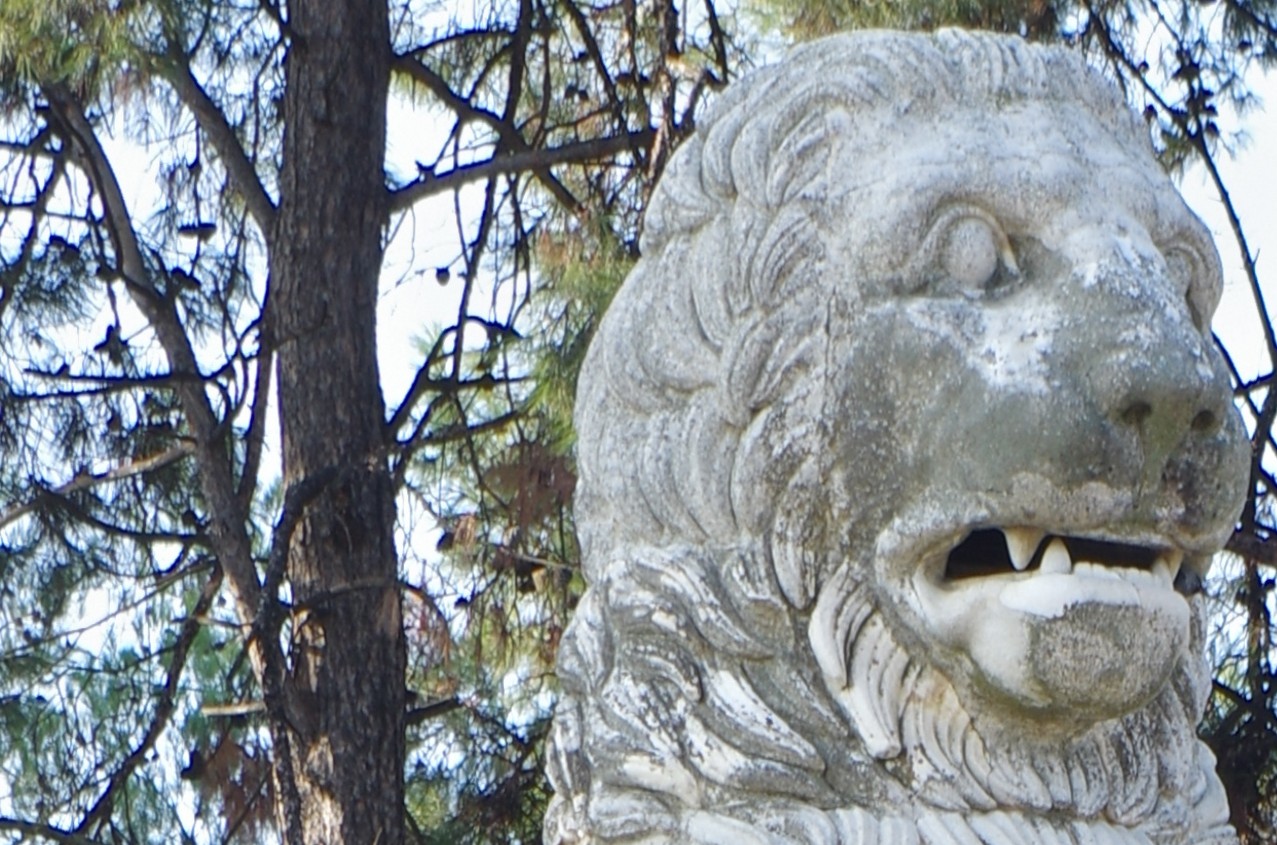
Laomedon of Mytilene: Companion, Commander, and Satrap
Iakovos Garivaldis OAM
Etymology: Laomedon is derived from the Ancient Greek words Λαός + μέδων or ‘People’s Ruler’.
Among the Greek associates who rose to prominence within the Macedonian court of Philip II and Alexander the Great, Laomedon of Mytilene holds a distinctive place. Born in the mid-fourth century BC on the island of Lesbos, Laomedon was the son of Larichus and the brother of Erigyius, a distinguished cavalry commander. Like many prominent islanders entangled in the political upheavals of the Aegean, the brothers were exiled from Mytilene and found sanctuary in Macedonia, where they were granted citizenship in Amphipolis and integrated into the royal circle.
Laomedon became one of Alexander’s close childhood companions (φίλοι-philoi). His loyalty was tested early during the “Pixodarus affair” in 337 BC, when a rift opened between Philip II and his young heir over a proposed marriage alliance. Alongside Ptolemy, Nearchus, Harpalus, and his brother Erigyius, Laomedon was banished by Philip for supporting Alexander’s interests. When Alexander ascended the throne in 336 BC, he immediately recalled his loyal friends and rewarded them with positions of trust.
When the Macedonian army crossed into Asia in 334 BC, Laomedon accompanied the expedition as a trusted officer. While his brother Erigyius commanded allied Greek cavalry on the battlefield, Laomedon’s particular strength lay in his fluency in both Greek and Persian—a rare and invaluable skill in the expanding empire. Because of this linguistic mastery, Alexander appointed him to oversee the administration and interrogation of Persian prisoners of war, a sensitive role requiring discretion, intelligence, and diplomatic tact. Later, in 326 BC, Laomedon was also named among the trierarchs responsible for equipping and commanding vessels in Alexander’s Indus River fleet.
Following Alexander’s sudden death in Babylon in 323 BC, the empire’s leading generals gathered to divide its vast territories. In the resulting Partition of Babylon—and again at the Settlement of Triparadisus in 321 BC—Laomedon was confirmed as the Satrap of Syria (encompassing Coele-Syria and Phoenicia). Occupying a strategic crossroads between Asia Minor, Mesopotamia, and Egypt, Laomedon governed the province with relative stability for several years.
However, his position soon drew the ambition of his former fellow exile, Ptolemy, who now ruled Egypt and coveted Syria as a vital buffer zone. In 320 BC, Ptolemy offered Laomedon a substantial sum of money to cede the province; when Laomedon refused, Ptolemy dispatched his general Nicanor to invade. Captured and briefly imprisoned in Egypt, Laomedon managed to escape to Caria, where he joined Alcetas, the brother of Perdiccas. Following Alcetas’s defeat in 319 BC, Laomedon disappears from the historical record, remembered as a steadfast companion who bridged the Greek and Persian worlds of Alexander’s empire.
 Save as PDF