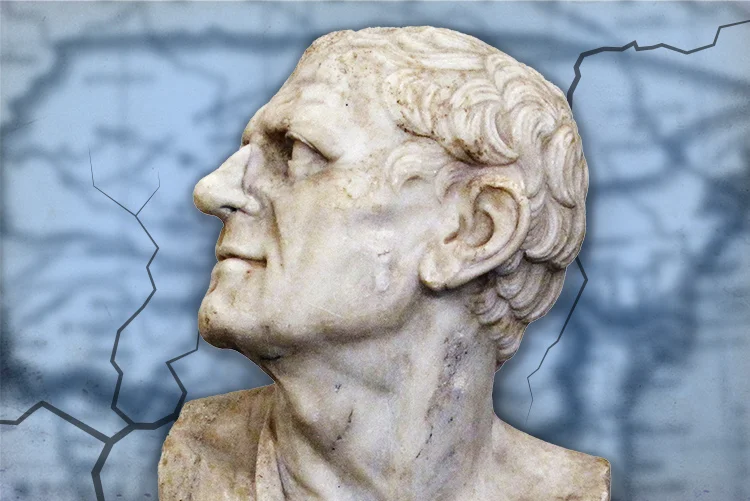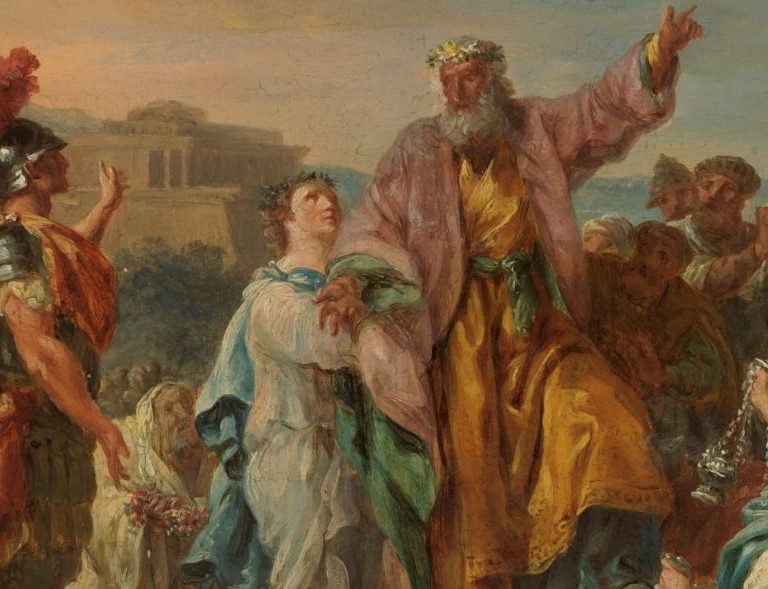
Onesicritus — Helmsman and later writer
Iakovos Garivaldis OAM This is another high commander in Alexander’s army, mainly part of the naval command. He was a Greek historian and Cynic philosopher … Read More

Iakovos Garivaldis OAM This is another high commander in Alexander’s army, mainly part of the naval command. He was a Greek historian and Cynic philosopher … Read More
We continue with the three squadron commanders in Alexander’s army who were crucial in the victory over at Gaugamela, a wide plain near modern-day Tel Gomel in northern Iraq (northeast of Nineveh and Mosul). It was the second and final major clash between Alexander the Great of Macedon and King Darius III which decided the Greco-Persian war.
This time we consider the contribution of one of the most trusted and capable High Commanders in Alexander the Great’s army who actually lead the phalanx into battle. What is the etymology if his name in Ancient Greek, let’s find out…
We continue analysing the lives and achievements of three bodyguards and high ranked officers in Alexander the Great’s army that conquered Asia Minor, the Persian Empire, even India before he faced a revolt within his army who were getting tired and missed their families back home. Very interesting stories of struggle, bravery and survival of the fittest.
We continue with Alexander the Great’s commanders, searching for ‘areti’ (Αρετή = virtue+bravery+rightousness+…) in all of his officers. This time we examine Cleitus the Black to distinguish him from another, Leonnatus and Aristonous. All senior commanders.
We take another look at the army of Alexander the Great with two of his most trusted infantry commanders that helped him tremendously in his campaign, even after reaching India and the Hyphasis (Beas) River, as Alexander wanted to push further east toward the Ganges River and the powerful Nanda Empire.
Among the remarkable cast of commanders who served Alexander the Great, Antigonus the One-Eyed and Nearchus the Cretan represent two very different expressions of loyalty, ambition, and capability — one a ferocious land commander who nearly reunited Alexander’s empire by force…
Continuing with the most important commanders and officers of Alexander the Great’s army which conquered the known world we are examining the lives of two more of his close companions that later became rulers of different parts of his empire.
We continue looking at the expedition to the east of Macedonia Alexander’s commanders and this time we decided to take on only one name that of the best friend of Alexander, as they were together from their schooling times. Let us see how their friendship developed and where Hephaestion was useful to Alexander.
We continue with the commanders of Alexander the Great’s expedition to the East of Macedonia with two very important persons in his senior camp. Here we examine the lives of two commanders who started as positive for Alexander’s campaign but finished up problematic…
Together, these three commanders illustrated the multi-faceted nature of Alexander’s campaigns. Parmenion provided the essential strategic framework, Craterus embodied the fierce loyalty and martial spirit of the troops, and Perdiccas represented the sweeping, tragic political ambitions that defined the post-Alexandrian world.
Alexander’s campaign wasn’t just a military conquest; it was essentially the world’s first massive cultural “rebrand.” He didn’t just want to rule Persia; he wanted to fuse it with Greece to create a singular, Greco-Persian superpower.
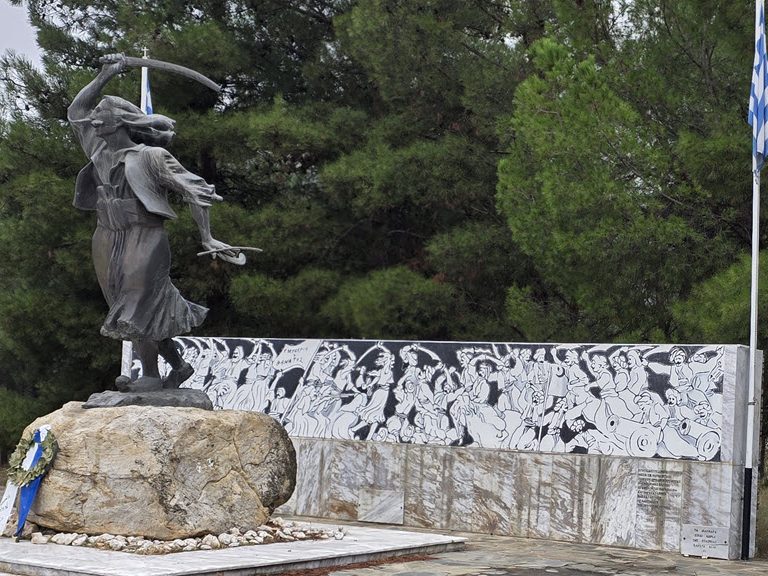
Στο δρόμο από τα Βασιλικά μέχρι τη Γαλάτιστα επί της Θεσσαλονίκης – Πολυγύρου κοντά στη Θέρμη, υπάρχει ένα υπέροχο μνημείο. Είναι το Μνημείο του Καπετάν Χάψα, οπλαρχηγού από τη Χαλκιδική κι ενός ακόμη ήρωα της επανάστασης του 1821.
Ο Αλέξανδρος υλοποίησε το στρατηγικό σχέδιο του Φιλίππου να απελευθερώσει τις ελληνικές
αποικίες στα παράλια της Μ. Ασίας, ελληνικές πόλεις-κράτη από τον 6ο -7ο αι. π.Χ. , ώστε να δημιουργήσει ένα ”τείχος” με σκοπό την απομάκρυνση των Περσών από το Αιγαίο.
The younger brother of Magnetes, descendant (son) of the daughter of Deucalion, was named Macedon.
Ὁ ἀδελφὸς τοῦ Μάγνητος ὁ νεώτερος ἔκγονος (υἱὸς) τῆς κόρης τοῦ Δευκαλίωνος ὠνομάσθη Μακεδών.
Protected by Security by CleanTalk