
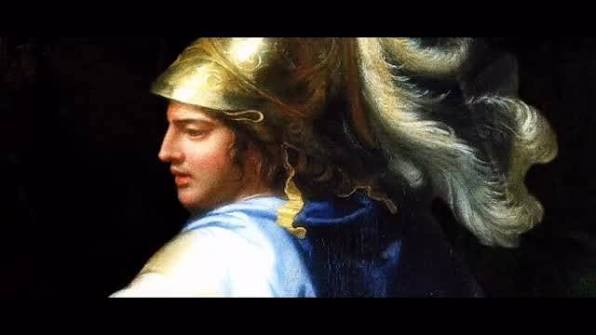
Hephaestion
Iakovos Garivaldis OAM
We continue looking at the expedition to the east of Macedonia Alexander’s commanders and this time we decided to take on only one name that of the best friend of Alexander, as they were together from their schooling times. Let us see how their friendship developed and where Hephaestion was useful to Alexander.
Hephaestion (c. 356–324 BC)
Hephaestion was born in Pella, the Macedonian capital, to a nobleman named Amyntor, placing him squarely within the privileged class from which Philip II drew his court companions. He and Alexander almost certainly met as boys at the court school, and their bond deepened significantly when both studied under Aristotle at Mieza from around 343 BC. It was in that intellectual environment — debating philosophy, reading Homer, wrestling with questions of leadership and glory — that their friendship took its defining shape. Alexander identified deeply with Achilles, and Hephaestion naturally assumed the parallel role of Patroclus, a framing both men appeared to embrace consciously throughout their lives.
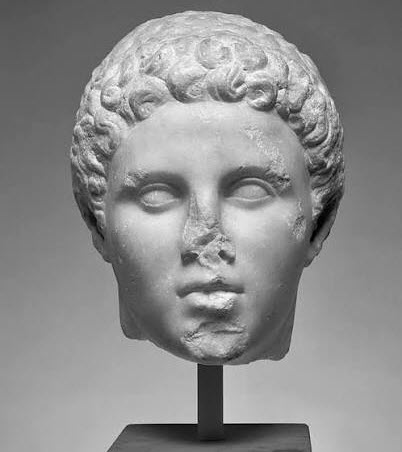
What made Hephaestion uniquely valuable was not purely military brilliance — commanders like Craterus and Coenus arguably surpassed him tactically — but rather his total personal loyalty and his administrative versatility. Alexander trusted him with tasks requiring absolute discretion. He led diplomatic missions, supervised major engineering and logistics operations, and commanded cavalry effectively at Gaugamela (331 BC) and during the Indian campaigns. In 324 BC Alexander appointed him Grand Vizier — the highest administrative office in the empire — a remarkable elevation reflecting how indispensable he had become to running a vast, multi-ethnic realm stretching from Greece to the Punjab.
Their relationship attracted comment even in antiquity. Ancient sources including Arrian and Curtius note that Alexander openly acknowledged Hephaestion as the person who knew him best and loved him most completely. Whether their relationship was romantic in a physical sense remains debated by historians, but within Macedonian aristocratic culture such a bond between men would have carried no particular stigma. Alexander himself, visiting Troy early in the campaign, laid a wreath on the tomb of Achilles while Hephaestion honoured Patroclus — a gesture that was anything but accidental.
Their one recorded serious quarrel — a dispute apparently mediated by Olympias — was resolved quickly, with Alexander reportedly telling Hephaestion that he would be nothing without Alexander’s favour. It was a sharp remark, but their closeness resumed immediately.
Hephaestion died in Ecbatana in 324 BC, likely from typhoid fever, possibly worsened by heavy drinking during his recovery. Alexander’s grief was extraordinary by any measure — he reportedly lay with the body for days, ordered empire-wide mourning, had Hephaestion’s doctor executed, and sought divine honours for his friend from the oracle at Siwa. He never fully recovered emotionally.
Alexander himself died in Babylon just eight months later, in June 323 BC.
 Save as PDF