
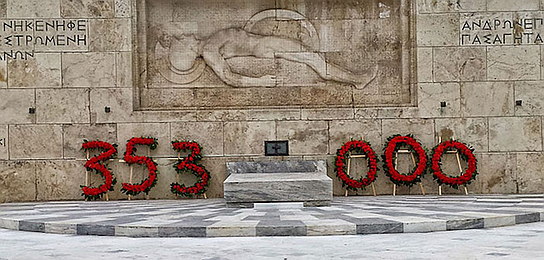
The Genocide that the World Forgot
19th May 2026 –
Ο Ελληνισμός δεν ξεχνάει και περιμένει δικαίωση!
The concept of human memory is selectively political, often highlighting certain tragedies while consigning others to the margins of history. Among these forgotten atrocities is the systematic annihilation of the Pontian Greeks from the northern region of Asia Minor along the Black Sea coast. While the modern world readily recalls the horrors of the Western Front during World War I, the concurrent human catastrophe occurring within the collapsing Ottoman Empire remains obscure to the global consciousness. For nearly three millennia, a vibrant, distinct Greek-speaking population had flourished in the Pontic Alps and coastal cities like Trebizond (Bruneau, 2013). Yet, in the span of a single decade, this rich cultural tapestry was violently and irrevocably unraveled.
The structural violence against the Pontian Greeks was catalyzed by the rise of the Young Turks and the Committee of Union and Progress (CUP) starting in 1908. Driven by a radical nationalist ideology aimed at homogenizing Anatolia under a singular Turkish identity, the Ottoman authorities increasingly viewed Christian minorities as internal security threats. When World War I erupted, these ideological tenets transformed into a blueprint for destruction. Because of their unique isolation in the mountainous areas of northern Anatolia, the Pontian Greeks had preserved a distinct language variation and culture, which further marked them as an alien element in the newly envisioned nation-state (Tseligka, 2023). Under the pretext of wartime necessity and border security, the regime initiated a targeted campaign of persecution against its own citizens.
Rather than relying solely on immediate mass executions, the Ottoman regime utilized highly effective systematic logistical measures known as “displacement atrocities.” A primary instrument of devastation was the forced conscription of Christian men into the notorious Amele Taburları, or labor battalions, where hundreds of thousands were deliberately worked to death under brutal conditions (Basso, 2016). For the remaining civilian population—consisting primarily of women, children, and the elderly—the state engineered forced deportations. Entire villages were uprooted and marched deep into the scorching, inhospitable interior of Anatolia without food, water, or medical provisions, ensuring high mortality rates through exposure and starvation (Basso, 2016).
The violence escalated dramatically in the aftermath of World War I during the Greco-Turkish War (1919–1922). Nationalist forces under Mustafa Kemal advanced across Asia Minor, resulting in widespread civilian casualties and ethnic cleansing deployed by regional forces (Exertzoglou, 2016). Towns were burned, and survivors were hunted down in the mountains, forcing a mass exodus toward the Black Sea ports. By the time the active massacres concluded, it is estimated that more than half of the Pontian Greek population had perished between 1914 and 1924 (Tseligka, 2023). Those who managed to escape became a completely destabilized victim diaspora, scattered across Greece, the Soviet Union, and eventually Western Europe (Tseligka, 2023).
The final stroke to the ancient Greek presence in Asia Minor was institutionalized through international diplomacy. The 1923 Treaty of Lausanne mandated a compulsory population exchange between Greece and Turkey, forcing approximately 1.5 million Greek Orthodox Christians to abandon their ancestral homelands permanently (Exertzoglou, 2016). While contemporary political frameworks sometimes viewed this forced migration as a mechanism to stabilize regional borders and prevent further mass atrocities (Faulkenberry, 2012), it fundamentally completed the ethnic cleansing initiated by the wartime regimes. The ancient Pontian homeland was emptied of its native inhabitants, sealing a tragic chapter of demographic engineering.
Today, the legacy of the Pontian Greek genocide occupies a complicated space within international memory politics. In modern Greece, the recognition of this historical trauma did not officially surface in parliament until the late 20th century, following decades of diplomatic suppression aimed at maintaining stable Greco-Turkish relations (Sjöberg, 2015). Globally, the tragedy remains largely overshadowed by other contemporary atrocities, leaving descendants to continually lobby for historical visibility. True justice for historical atrocities requires comprehensive remembrance; until the international community fully acknowledges the systematic erasure of the Pontian Hellenes, it remains a poignant reminder of a genocide that the world chose to forget.
References
Basso, A. R. (2016). Towards a theory of displacement atrocities: The Cherokee Trail of Tears, the Herero Genocide, and the Pontic Greek Genocide. Genocide Studies and Prevention, 10(1), 5–29. https://doi.org/10.5038/1911-9933.10.1.1297 Cited by: 21
Bruneau, M. (2013). The Pontic Greeks, from Pontus to the Caucasus, Greece and the diaspora. Revue de géographie alpine, 101(2). https://doi.org/10.4000/rga.2092 Cited by: 16
Exertzoglou, H. (2016). Children of memory: Narratives of the Asia Minor Catastrophe and the making of refugee identity in interwar Greece. Journal of Modern Greek Studies, 34(2), 343–366. https://doi.org/10.1353/mgs.2016.0030 Cited by: 24
Faulkenberry, J. B. (2012). The 1923 Greco-Turkish population exchange: Successful prevention of genocide and mass atrocities (Master’s thesis). U.S. Army Command and General Staff College. Cited by: 4
Sjöberg, E. (2015). “Right to memory”: From the Asia Minor Catastrophe to the notion of the Pontian genocide. International Conference on the Genocide of the Ottoman Greeks.
Tseligka, E. (2023). The reterritorialisation of Pontic Greeks in Germany and the modernisation of tradition. Athens Journal of Social Sciences, 10(4), 257–272. https://doi.org/10.30958/ajss.10-4-2
 Save as PDF